
What worked for Hyundai in India when so many other auto manufacturers have had to eat humble pie? Pavan Lall finds out.

The dealers operating in the space have jumped nearly three times over the past two years.

China's biggest carmaker, which own brands like Maxus, MG, Roewe and Yuejin, plans to invest $1 billion in India manufacturing unit, reports Swaraj Baggonkar from Mumbai.

In the next 2-3 years the company will pump in Rs 4,000 cr in product development, R&D and marketing infrastructure.

The company is planning the despite facing continued pressure on sales.

Market leaders saw good traction for new cars, including the electric ones.

With the new Verna, Hyundai takes on Honda. Beating the Honda City is something the country's second-largest car maker has taken upon itself with its new launch. Will it succeed?

This year's edition, three years lost to the pandemic and scheduling, wore a distinctive shade of green, and, as would befit an era of technology shift from internal combustion engines to electric motors, had a clutch of high-technology exhibits and concepts. But the excitement of the expo's heyday was missing.

One of the main selling points of the i20 is its easy to drive nature.

Almost all of these companies either unveiled their new electric vehicle or alternative energy-powered models.

Maruti Suzuki India continued its grip in the passenger vehicles market in India with five of its models in the top ten best selling models in June.
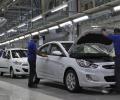
Major automobile manufacturers like Maruti Suzuki, Hyundai, Mahindra & Mahindra, Tata Motors and Toyota Kirloskar on Tuesday reported decline in domestic passenger vehicle sales in May compared to the previous month as a spike in COVID-19 cases and lockdowns across various states hit production and dispatches. The country's largest carmaker Maruti Suzuki India (MSI), which shut production from May 1 to May 16 so as to divert oxygen from industrial use for medical purposes, reported domestic dispatches to dealers at 35,293 units last month, down 75 per cent from 142,454 units in April. The company said sales of its mini cars, comprising Alto and S-Presso, declined by 81 per cent to 4,760 units in May as against 25,041 units in April this year.
.jpg)
The compact segment makes up for nearly 25 per cent of car sales in India.

Passenger vehicle wholesales in India increased by 12.73 per cent to 285,367 units in November as against 253,139 units in the same month last year riding on the back of festive demand, auto industry body SIAM said on Friday. According to the latest data by the Society of Indian Automobile Manufacturers (SIAM), two-wheeler sales rose 13.43 per cent to 16,00,379 units, compared with 14,10,939 units in the same month last year.

The diesel variant has an average of 24kmpl while the petrol delivers 18.9 kmpl.

The country's largest carmaker Maruti Suzuki India (MSI) on Monday reported a 11.8 per cent increase in wholesales to 164,469 units in February. The company had sold 147,110 units in February last year, Maruti Suzuki India (MSI) said in a statement. Domestic sales increased 11.8 per cent to 1,52,983 units last month, as against 1,36,849 units in February 2020, it added.
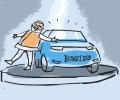
From Hyundai to Tata Motors, automakers are staring at a bleak future. With no succor provided in the Budget, the pain for companies is likely to continue for the next two quarters.

Major automakers, including Maruti Suzuki, Hyundai, Tata Motors, Mahindra & Mahindra, Kia, Toyota and Honda, on Thursday reported healthy growth in passenger vehicles sales in June, recovering from the disruptions induced by the second wave of COVID-19. The country's largest carmaker Maruti Suzuki India (MSI) posted total sales of 1,47,368 units in June, up from 46,555 units in May. Its domestic dispatches to dealers last month stood at 130,348 units, up from 35,293 units in May, as easing of COVID-related restrictions helped the auto major to dispatch more units to dealerships.

Passenger vehicle sales continue to drop in June; Maruti, Hyundai, Tata Motors, Toyota witness decline. Mahindra & Mahindra, however, reported a 4 per cent growth.

In its first official engagement with the Indian government, Elon Musk-led Tesla and other global automotive (auto) manufacturers sought clarification on the new electric vehicle (EV) policy, specifically regarding investment guidelines and the timeline for the domestic value addition (DVA) requirement. Officials who attended the meeting told Business Standard that the original equipment manufacturers (OEMs) tried to understand whether the complete investment would be made within three or five years and the duration they would have to achieve the 50 per cent DVA. "The consultation meeting was convened to address queries from auto OEMs.

Maruti Suzuki, Hyundai, Honda Cars and Tata Motors posted single digit growth during the period under review while M&M reported decline in sales.
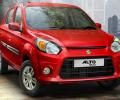
The list clearly shows the dominance of Maruti and Hyundai in the Indian passenger vehicle market.
Close on the heels of the Mukesh Ambani-controlled Reliance Retail's possible entry into the second-hand car market, Tata Motors, the country's second largest automobile major, is planning a similar foray.
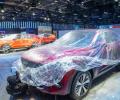
Owing to the poor market conditions and tepid sentiments, the size of the show has shrunk compared to the last edition, which took place in 2018. A majority of the two-wheeler makers, and several car and commercial vehicle makers, have opted out of this year's show, which opens for the media on Wednesday.

Even as domestic passenger car sales declined 29.4 per cent between April and August this year, exports grew 6.5 per cent, partially cushioning the blow from slowing sales.
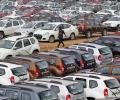
While customers in metro cities are still buying cars, quick growth is likely only from upcountry markets, where highways and roads are being built, and discretionary income and aspirations are rising.

The Hyundai i20 Active is an equipment-loaded car which increases the practicality of a hatchback.

According to the latest data from SIAM, in the top 10 best passenger vehicles, Maruti's Alto retained the top position last month

Passenger vehicle wholesale in India increased by 14.19 per cent to 3,10,294 units in October against 2,71,737 units in the same month last year as companies despatched more units to dealers to cater to enhanced demand in the festive season, auto industry body SIAM said on Wednesday. According to the latest data by the Society of Indian Automobile Manufacturers (SIAM), two-wheeler sales also rose 16.88 per cent to 20,53,814 units, compared with 17,57,180 units in the same month last year. Motorcycle sales were at 13,82,749 units as against 11,16,886 units in October 2019, up 23.8 per cent.

Carmakers usually come up with such year-end announcements.

Higher exports will also drive up volumes, as the company seeks to avail of the benefits under the government's recently announced production linked incentive scheme.

Korea's second-largest automaker and Hyundai's sister company showcased a line-up of 16 models from its global portfolio at the ongoing Auto Show

Al-Nassr overturned a 1-0 first leg deficit to win 4-3 on Monday but with the contest ending 4-4 on aggregate, the players headed into a shootout from which Al-Ain prevailed.

While the overall passenger car industry is expected to grow at around seven per cent a year in the next five years, SUV growth is expected to be over 10 per cent.

Several carmakers, including car market leader Maruti Suzuki India pulled the plug on diesel models citing higher costs for BSVI variants leaving buyers with limited options.

Market leader Maruti Suzuki sold 51,274 units, down 49.61 per cent from the same month last year. Hyundai Motor sold 21,320 units, a decline of 49.25 per cent and Mahindra & Mahindra sold 8,075 units, down 54.54 per cent.

The SUV leaves a good impression thanks to its athletic built.

Delhi, labelled the world's most polluted city in a 2014 World Health Organization survey, alone makes up about 7 per cent of total Indian auto sales.

During May, Maruti Suzuki's domestic car sales were up 2.59 per cent at 87,402 units as against 85,190 units in the same month last year.

A clutch of automakers including Maruti Suzuki, Hero MotoCorp, Mercedes Benz India, Eicher Motors, TVS Motor, and Isuzu Motors India announced they had got the clearance from the governments of the states they operate in to resume operations.
